




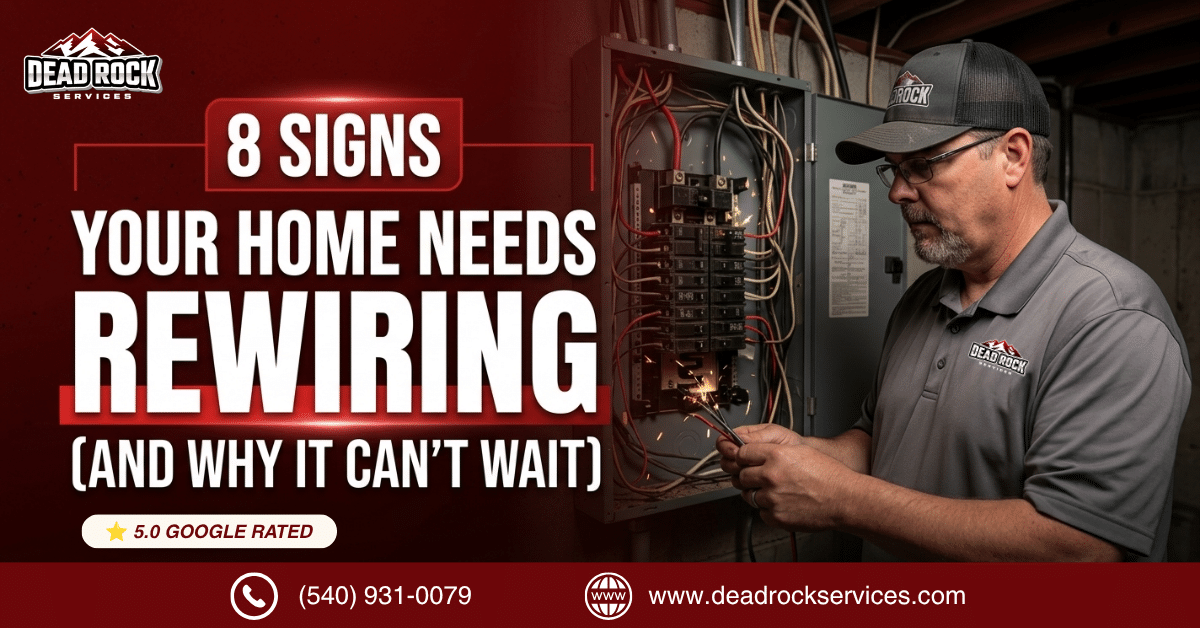
Faulty and outdated wiring is one of the leading causes of house fires — and the warning signs are easy to miss until something goes wrong. Older homes across the Eastern Panhandle, along with farm properties and additions wired years ago, are especially worth a closer look.
Drawing on years of diagnosing electrical problems in homes throughout the region, here are eight signs your home may need rewiring, and why this is one repair you shouldn’t put off.
The 8 warning signs
1. Breakers trip or fuses blow repeatedly
Occasional trips are normal. Repeated ones point to overloaded or failing circuits that the wiring can no longer handle safely.
2. Flickering or dimming lights
Lights that flicker or dim — especially across multiple rooms — can signal loose connections or wiring that’s struggling to carry the load.
3. Warm or discolored outlets and switches
Outlets or switch plates that are warm, scorched, or discolored indicate heat building up at the connection — a genuine fire risk.
4. A burning smell or buzzing
A persistent burning odor or buzzing from outlets, switches, or the panel means stop and call an electrician immediately.
5. Two-prong outlets and no ground
Ungrounded two-prong outlets throughout the home are a sign of older wiring that doesn’t meet modern safety standards.
6. Knob-and-tube or cloth-insulated wiring
If your home still has knob-and-tube or fabric-insulated wiring, it has aged well past its safe service life and should be evaluated.
7. Aluminum branch wiring
Homes wired with aluminum branch circuits in certain eras are prone to loose, overheating connections and need professional remediation.
8. Frequent reliance on extension cords and power strips
If you can’t function without extension cords and daisy-chained power strips, your home simply doesn’t have enough circuits — a sign it has outgrown its wiring.
Why outdated wiring can’t wait
Unlike a slow drip or a worn appliance, failing wiring doesn’t give much warning before it becomes dangerous. Overheated connections behind walls are a top cause of electrical fires, and damaged or ungrounded wiring also puts you at risk of shock. Addressing it early is far cheaper — and far safer — than dealing with the consequences.
What rewiring involves
Rewiring can range from replacing a few problem circuits to a whole-home update, depending on what the inspection finds. We start by evaluating your existing wiring, then explain exactly what needs attention and why. The work is permitted, inspected, and done to current code.
Farm and outbuilding wiring
Barns, workshops, and livestock buildings have their own wiring demands and a harsher environment — moisture, dust, and heavy equipment loads. If you’ve noticed problems in an outbuilding or need power run safely to one, that’s specialized work we handle for properties across the area.
Frequently Asked Questions
How do I know if I have knob-and-tube or aluminum wiring?
An electrician can confirm it during an inspection. Clues include a home built before modern wiring standards, ungrounded outlets, and visible ceramic knobs or fabric-covered wire in the attic or basement.
Can a house be rewired without tearing out all the walls?
Often, much of the work can be done by fishing wire through existing cavities with minimal disruption. The exact approach depends on your home’s construction — we’ll explain it before we start.
Is rewiring covered by homeowners insurance?
Coverage varies, but outdated wiring like knob-and-tube can actually affect your ability to get or keep coverage. Updating it often helps with insurability.