
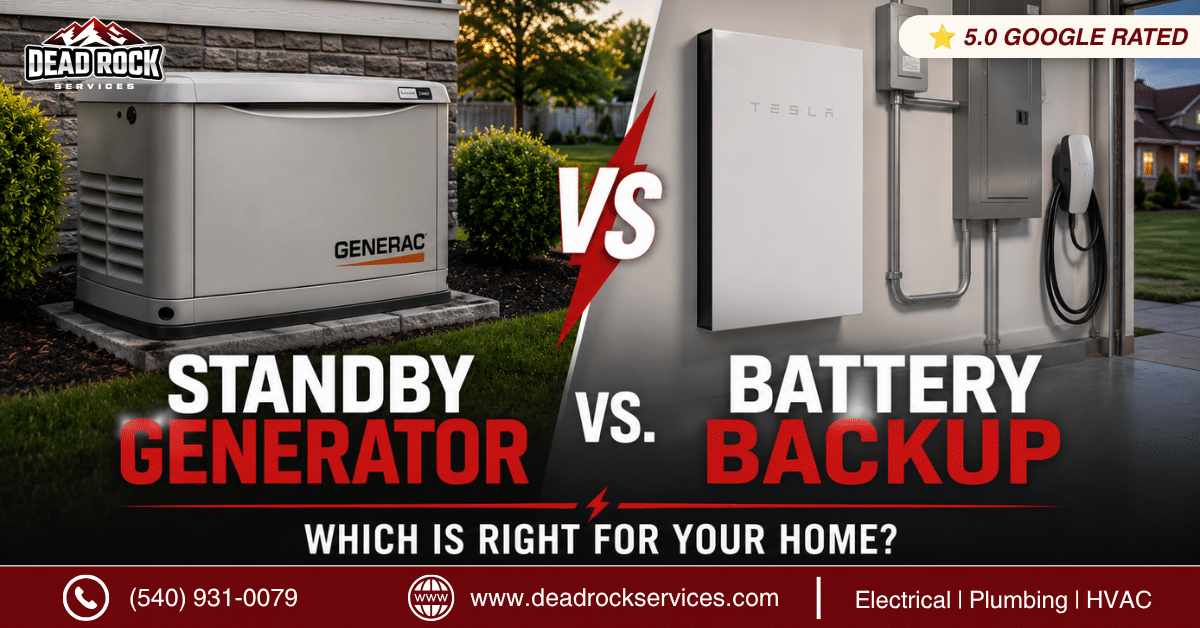
Backup power used to mean one thing: a generator. In 2026 homeowners are weighing a second option, as home battery systems become more common and more affordable.
Both keep the lights on. They do it very differently, and the right choice depends less on which technology is newer and more on what kind of outages you actually experience. Here’s an honest comparison.
How each one works
Standby generator
A permanently installed unit outside your home, wired in through an automatic transfer switch. When the grid fails, it starts itself — usually within seconds — and runs on natural gas or propane for as long as fuel is available.
Battery backup
A battery system stores electricity, typically charged from the grid or from solar panels. When power fails, it switches over instantly and silently, supplying your home until the stored energy runs out or the sun recharges it.
The comparison that matters
Runtime
This is the deciding factor for most homes here. A natural-gas standby generator can run for days because it’s connected to your gas supply. A battery’s runtime is fixed by its capacity and what you’re running — often measured in hours rather than days unless it’s paired with solar.
Fuel and refueling
Generators need a fuel source: natural gas (unlimited during an outage) or propane (limited by tank size). Batteries need no fuel at all, which is a real advantage — until they’re empty.
Noise and maintenance
Batteries win here decisively. They’re silent and essentially maintenance-free. Generators run an engine, which means noise during operation and periodic service to stay reliable.
Upfront cost
Both are significant investments. Battery systems generally cost more per unit of backup capacity delivered, though incentives can narrow the gap. Sizing drives the cost in both cases.
Solar compatibility
If you have solar or plan to add it, a battery is the natural companion — it stores what you generate and recharges during a multi-day outage. A generator doesn’t interact with solar the same way.
Why runtime matters so much in the Eastern Panhandle
Our outage profile isn’t a 90-minute flicker. Summer thunderstorms and winter ice events across Berkeley, Jefferson, Frederick, and the surrounding counties can take lines down for a day or more, and rural service areas are often restored last.
That’s the practical reason we still recommend standby generators to most homeowners here. A battery that comfortably covers a four-hour outage is a very different proposition during a three-day one — particularly if you rely on a well pump, sump pump, or medical equipment.
Using both together
Increasingly, homeowners aren’t choosing — they’re layering. A battery handles the frequent short interruptions instantly and silently, and the generator takes over for extended outages. If you already have solar and a battery, adding a generator specifically for multi-day coverage is a sensible extension rather than a redundancy.
Sizing and the transfer switch
Whichever route you take, two things determine whether it works when you need it: correct sizing and a properly installed transfer switch.
Sizing means a real load calculation — deciding whether you’re covering essential circuits (refrigerator, furnace blower, well or sump pump, key lighting) or the whole home including central air. The transfer switch safely isolates your home from the utility, protecting line workers and your equipment. Both are licensed electrician work, and both require a permit.
As an authorized Generac dealer, we size, install, permit, and service standby systems throughout the region, and we’ll give you a straight answer about whether a battery makes more sense for your situation.
Frequently Asked Questions
Mark this section up with FAQPage schema — see the LLM Visibility Kit.
How long can a standby generator run?
On natural gas, effectively for days, since it draws from your gas supply. On propane, runtime depends on tank size. Either way, standby generators are built for extended outages.
How long does a home battery last during an outage?
It depends on capacity and what you’re powering — commonly hours rather than days for whole-home use, though running only essential circuits extends it considerably. Paired with solar, it can recharge daily.
Can I have both a generator and a battery?
Yes, and it’s an increasingly common setup. The battery covers short interruptions silently; the generator handles multi-day outages.
Do both need a transfer switch?
Both require proper equipment to isolate your home from the grid safely. Installation must be done by a licensed electrician and requires a permit and inspection.