



| QUICK ANSWER
To prevent frozen pipes, insulate any pipe running through unheated space crawlspaces, basements, attics, garages and exterior walls disconnect and drain outdoor hose bibs, seal air leaks near pipework, and keep your home heated even when away. During a hard freeze, let a trickle run from the most vulnerable faucet and open cabinet doors under sinks on exterior walls. If a pipe freezes, shut off your main water valve before attempting to thaw it, and never use an open flame. |
| Last updated: September 2026
Reviewed by the licensed technicians at Dead Rock Services family-owned and serving WV, VA & MD since 2015. Licensed in West Virginia, Virginia & Maryland · Authorized Generac dealer · 5.0 stars from 800+ Google reviews. |
Frozen pipe searches spike enormously in winter, and by then it’s already too late for the homeowners doing the searching. A burst pipe can release a remarkable volume of water into a house in a very short time.
September and October are when this problem is cheap to solve. Here’s what actually prevents frozen pipes, what to do if it happens anyway, and which parts of this are worth handing to a plumber.
Why pipes burst it isn’t where you’d think
Water expands as it freezes, but the burst usually doesn’t happen at the ice itself. Pressure builds between the ice blockage and a closed faucet downstream, and the pipe fails at the weakest point in that stretch which may be some distance from the frozen section.
That’s why relieving pressure matters as much as preventing ice, and why a pipe can burst in a spot that seems unrelated to the cold area.
Where to look in your home
The vulnerable runs are almost always the same:
- Crawlspaces and unheated basements
- Attics and any pipe above insulation
- Garages, especially with a door left open
- Pipes in exterior walls, particularly on the north side
- Outdoor hose bibs and irrigation lines
- Well houses, pump houses, and unheated outbuildings
- Under kitchen and bathroom sinks on exterior walls
Older homes across the Eastern Panhandle frequently have pipe runs added over the decades through spaces nobody intended to heat. Those are the ones that surprise people.
How to prevent frozen pipes, the September checklist
Insulate exposed pipe
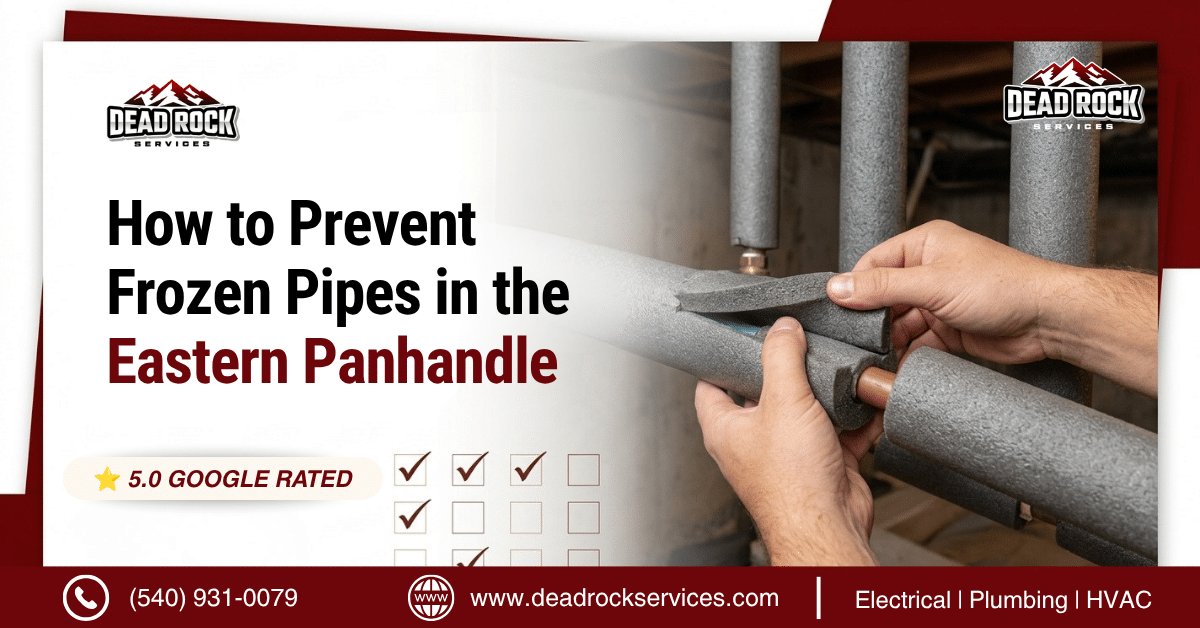
Foam sleeves or pipe wrap on any pipe in unheated space. Inexpensive, and the single most effective step. Pay attention to elbows and joints, which are often left bare.
Deal with outdoor spigots now
Disconnect hoses, drain the line, and shut off the interior valve feeding each hose bib if you have one. A connected hose traps water in the spigot, and that’s a classic burst point. Consider frost-proof replacements for problem locations.
Seal the air leaks
Cold air reaching a pipe is what freezes it. Sealing gaps around rim joists, foundation vents, and where pipes pass through walls often matters more than the insulation on the pipe itself.
Keep the heat on
If you travel in winter, don’t switch the heat off. Leaving it at a moderate setting costs far less than a burst pipe. Shut off and drain the system if the property will be empty for a long stretch.
Consider heat tape where needed
For pipe runs that freeze repeatedly, thermostatically controlled heat cable is a proper solution. It must be installed correctly and to manufacturer instructions — improperly installed heat tape is a genuine fire risk, which is a good reason to have it done professionally.
During a hard freeze
- Let a slow trickle run from the faucet furthest along the most vulnerable run moving water resists freezing and relieves pressure
- Open cabinet doors under sinks on exterior walls so household heat reaches the pipes
- Keep the garage door closed if there’s plumbing in there
- Don’t drop the thermostat overnight during extreme cold
If a pipe is already frozen
Open the faucet it feeds so melting water has somewhere to go. Locate your main shutoff and be ready to use it if the pipe has already split, you’ll know the moment it thaws. Apply gentle heat with a hair dryer or towels soaked in warm water, working from the faucet end back toward the blockage.
Never use a blowtorch, propane heater, or any open flame. It’s a serious fire risk and can damage the pipe. If you can’t reach the frozen section, or you suspect it’s already burst, shut off the water at the main and call.
Know where your main shutoff today
The most useful thing in this entire article: find your main water shutoff now, make sure it actually turns, and make sure everyone in the household knows where it is. In a burst-pipe event, the minutes between the failure and shutting off the water determine the size of the repair bill.
Frequently Asked Questions
At what temperature do pipes freeze?
Pipes in unheated or exposed spaces become at risk once outdoor temperatures drop into the low twenties Fahrenheit, and sooner with wind exposure. Insulated pipes in heated space are far more resilient.
Should I leave faucets dripping in cold weather?
During a hard freeze, a slow trickle from the most vulnerable faucet helps moving water resists freezing and, more importantly, relieves the pressure that actually bursts pipes.
How do I thaw a frozen pipe safely?
Open the faucet it serves, then apply gentle heat with a hair dryer or warm towels, working from the faucet back toward the blockage. Never use an open flame. Know where your main shutoff is before you start.
Does homeowners insurance cover burst pipes?
Coverage varies by policy and often depends on whether reasonable steps were taken to prevent freezing such as keeping the property heated. Worth confirming with your insurer before winter.